Saturday, February 26, 2022

Black History Month through Story: Glory, The Gold Cadillac, and The Green Book


Today for Black History month I want to mention and,as time permits, summarize two of my favorite films and a favorite children's book that all depict themes on Black American culture. Whatever might not get finished with much thoroughness today will be something I can come back to in the next few days or the near future, in March. 


The Film Glory

This is not just one of my favorite films about Black American experience, but is one of my favorite films of all-time, ever since I saw it for the first time when it was first released in 1989. I love a good war film. You might say there is no such thing as a good war, but I do love a good war film. And, like WW II, this is one of those wars worth fighting for: It is the Civil War and it intends to end slavery. Here is a good opening to a summary of the film as I found it on Google search when I could not remember the year it first came out: 

Following the Battle of Antietam, Col. Robert Gould Shaw (Matthew Broderick) is offered command of the United States' first all-African-American regiment, the 54th Massachusetts Volunteer Infantry. With junior officer Cabot Forbes (Cary Elwes), Shaw puts together a strong and proud unit, including the escaped slave Trip (Denzel Washington) and the wise gravedigger John Rawlins (Morgan Freeman). At first limited to menial manual tasks, the regiment fights to be placed in the heat of battle. 
 (Retrieved from https://www.google.com/search?q=when+did+the+film+Glory+first+come+out%3F&rlz=1C1GCEA_enUS842US842&oq=when+did+the+film+Glory+first+come+out%3F&aqs=chrome..69i57.8125j0j15&sourceid=chrome&ie=UTF-8)

This film tells the true story of the first all-Black American regiment (which was volunteer) that fought in the Civil War. Matthew Broderick stars as the real-life figure Colonel Robert G, Shaw who leads the soldiers from its formationm in the winter of 1863 to July 18, 1863 when they extended their efforts against Fort Wagner in Charleston.This site was and to this day is considered the toughest beachhead defense constructed by the Confederate Army..It was an act of astounding bravery and the film demonstrates this well. Review site Rotten Tomatoes  stated that Edward Zwick directed this film well and made it stunning. 

Here are the primary main actors who played the real-life characters:

Matthew Broderick--Col. Robert Gould Shaw

Denzel Washington--Pvt. Trip. Won one of the three Oscars awarded to this film, for best supporting actor. 

Morgan Freeman--Sgt. Maj. John Rawlins

Cary Elwes--Maj. Cabot Forbes

Jihmi Kennedy--Pvt. Jupiter Sharts

Andre Braugher--Cpl. Thomas Searles

The film also won an Oscar for Best Cinematography (Freddie Francis)  and an Oscar for Best Sound  (Donald O. Mitchell, Gregg Rudloff, Elliot Tyson, and Russel Williams II). As a writer, I have to mention that the screenplay was wreitten by Kevin Jarre. 

It has also been stated in Entertainment Weekly online that Zwick, its director was carefully intent on making sure to work with the studio to prevent a "white savior narractive." One way in which he did this was to not overfocus on Broderick playing Shaw and to show the "power of truth." One of those truthful moments is when Washington's character is whipped when he is mistakenly accused of trying to desert. It was a gripping moment because although this was the punishment given to deserters at the time of the war, Pvt. Trip had opreviosuly been a slave. Here he was, supposedly free to be in the military, but being whipped as if still a slave. It was later discovered that all he was doing was looking for shoes that did not blister and cut feet. Another moment of truth was when Zwick pulled the narrative to the close focus on some soldiers (the main characters) together inside a tent. Zwick mentioned this as one ofo his stretegies and every single time I saw this film, I was impressed with this and had the same thought before ever reading it. It showed the intimacy of real life inside a scene which Zwick called "the heart of the film."It was a huge moment within a small space that made the scene pertain to the overall vitality of the film, its main feeling. 

(Nota bene: I will need to post more credits/source info here, more formally/properly.)


\The Children's Book, The Gold Cadillac

I included this book for my syllabus when I taught children's literature as did other professors who went before me. I felt it was a great history to carry on doing in more ways than one--the story itself as a true historical story and the history of its inclusiveness in the literature/English department at the college.

Written by Mildred D. Taylor and illustrated by Michael Hays, it was first published for young readers in the U.S. in 1987. In the story, a father gets a brand new gold cadillac and the family is anxious to drive from Ohio to Mississippi to visit family. In the rural South they receive nothing but suspicious glares and no admiration for their car and are stopped and harrassed by police who wonder where and how they got the car and why they are driving it around there. the story is told through the eyes of Lois one of the daughters and sister to Wilma. At this time I will not give away the ending. I hope you read this book and see how they make it home.  


Friday, February 25, 2022

Folklore for Black History Month and President's Day: "People Who Could Fly," "Honest Abe," and Honest George


For the rest of February and probably into March, I will be posting some North American Black American folklore in the form of folktales and folk music and will also be doing posts on some other Black American literature such as poetry from African American poets, books by African Americans, and films by African Americans or depicting Black American culture. 

The stories I will tell today are from North American folklore, the first being from Black American plantation folklore, and the second two from America's presidential history. Some are fictitious stories and some are true. 

People Who Could Fly

This story was told among enslaved African American plantation workers. To this day, many wish its ending were true.

Long ago when black people were taken from their homes in Africa and forced to come here to America to work as slaves, they were put onto ships and many died on the voyage across the Atlantic Ocean. Those that survived stepped off the boats into a land they had never seen before and put to the fields of plantations to work. Some refused and were killed. Others worked but were whipped by white men across their backs to make them work harder and they would turn and fight. Some of them killed the white men with their whips in the fight and others were killed by the white men. they wishes they could go home, back to Africa. 

Some of the enslaved would run in hopes of getting back to Africa, where there were no white men to enslave or whip them, where they would work only for the good of each other. There were tales that some of them ran as far as the ocean then ran into the ocean and no one knows for sure if any of them ran across the ocean and made it back to Africa or if they drowned. They figured they did not care so long as they were not slaves anymore. 

When white men took Africans upon the slave ships, they did not know who they were taking, if they were taking musicians, artists, or witch doctors. As long as they were strong, he took men, women, and children. Thus, sometimes he did not know that there would be a witch doctor among those he had captured. If he had known, and known that the witch doctor was a medium of the gods, he would have thought twice. But he did not care, Those he counted as they were taken to the ships were nothing but money being counted into his pocket to him. 

One ship of Africans was taken to a plantation in South Carolina had a witch doctor among them. He was the son of a witch doctor who was learned in the medicines and mediumship with the gods and carried the secrets and powers of the generations of Africa with him. 

One hot day when the sun singed his the very hair on his head and he was working with the others in the fields, the very air seemed to be on fire,. A young woman whose body curved with the child growing inside her fainted. The white man with the whip came and whipped her and forced her to get up after she had fallen to the ground. The others watched and said nothing and the white man yelled at them to get to work or that they would be whipped too. The pregnant woman fainted again while trying to work some more, and the white man came back with the whip. She screamed and fell to the ground again and this time the witch doctor went to her side when the white man was not looking and whispered something in her ear. Then she whispered it to the next person who whispered it to the next and so on until all of them had heard the whisper. They did it so quickly and quietly that the white man noticed nothing.

A few minutes later someone else in the fields fainted and when the white man with the whip rode toward him on his horse, the young witch doctor yelled, "Now!" He uttered a strange word, and the person who had fainted spread his arms out and moved them like wings and flew away into the sky and out of sight. 

The white man yelled, "Who did that? Who yelled out?" but the witch doctor did not answer and no one else told. "Just wait until I get my hands on him!" said the man with the whip.

Then the young woman with child fainted again. When the white man was almost upon her with his whip, the witch doctor yelled out, "Now!" and once again uttered a strange word. She, too, rose from the ground and, waving her arms like wings, she took to the sky and flew away into the distance and out of sight. 

This time the man with the whip knew who was responsible for this and as he pulled his arm back to whip the young witch doctor, the young man yelled, "Now! Now, Everyone!" He uttered the strange word, and all the Africans dropped their hoes, stretched out their arms and flew away, back to their home, back to Africa. 

That was long ago and no one remembers or knows what that magic word was that could make people fly. But who knows? Maybe someday some morning someone will awake with the strange word on his tongue and uttering it we will all stretch out our arms and take to the air, leaving these blood drenched fields of our misery behind. 

The tale as I told and typed it here is only one version of this tale. Other versions are often called "The People Could Fly" rather than "The People Who Could Fly" and the contents have slight differences.  There is a book entitled The People Could Fly by Virginia Hamilton (b. 1934, Yellow Springs, OH, d. 20023); in this book, she retold 24 Black American folktales including this one, and was illustrated by Leo and Diane Dillon, and was published in 1985. She wrote many children's books and another was titled Many Thousands Gone which tells stories from the history of slavery and of the Underground Railroad in America. She tells us 35 stories of 35 desperate escapes and about some daring protests. This one was published in 1983, also illustrated by Leo and Diane Dillon. 

I recommend these tales and these books both for children and adults as part of our important literary heritage and our important North American history, to keep these stories alive, to pass them on, that they not be forgotten, ignored, or erased, or banned. There has been a lot of news lately about banning books and materials and historical content from schools and I would like to ask you to share and spread stories that tell the truth. This does not mean it is okay to ban or erase folklore or fiction even if it is not a "real" or "true" story; for instance, we all know people cannot fly without an aircraft, but there is still truth in this story that Africans were brought to this country to be made to work in the fields through enslavement and were yes this frequently and regularly treated badly, horribly wrong, much as some people might wish to deny that or have it erased from history. It is important that people remember.

Wanting to fly away or get away or get back home, back to one's comfort zone away from horrors and pain is a theme common to African American plantation spirituals, These are a part of the folklore--not just the folktales. Folk music tells stories within the songs. In music class in school when we learned folk music we were taught the Black American plantation spiritual called "Swing Low, Sweet Chariot." Slaves wanting to be carried home, whether to Africa or their heavenly home; Many were tired and beaten and many died. Another song I learned at a young age was "Nobody Knows the trouble I've Seen." I haven't played some of the songs I learned as a child for many years now, but perhaps I will go back to them, practice, then add them here to this blog later or in comments under this blog. 

Honest Abe and Honest George, in Honor of Honesty and President's Day

President Abraham Lincoln was known as "Honest Abe" due to his belief in honesty as both a lawyer and president. As a lawyer, he spoke of and taught the importance of honesty in one's law work and felt strongly against lying or shifting the truth to win a case. He also believed in speaking for and standing up for his convictions, his beliefs, that all people are created equal and should be treated equally with human dignity. He worked to free the slaves. This is of course a true legend; just because it is told as inclusive in the genre of folklore does not mean it is fiction or false.

Then we have the folktale of George Washington, the first president of the United States. The legend has it that as a young boy he was given an ax by his birthday and ran outside and was so excited to use the ax that he cut down a cherry tree. When his dad asked him if he cut down the tree, George replied that yes he did, that he could not be dishonest, he had to admit it. The story has it that his dad then replied, "George, your honesty is worth 1,000 cherry trees!" There is no proof that this story is true. It is also part of our North American folklore, but unlike the story above about Lincoln, this one is not known to be factual or "real." It was included in a book that a publisher and bookseller distributed, possibly for money, to sell books and make money since the popularity of the president would make it sell well. In turn, this story could help improve or perpetuate the popularity of the president. The story may have been a marketing ploy.

Legends are a category of folklore. In a legend, we know the person is real (or probably real), was either famous or infamous (Abe Lincoln vs. Jesse James, e.g.),and we do not know the extent of the truth to a story. The facts can change, get exaggerated or downplayed through word of mouth as a legend spreads. Often, some elements of the legend become known as normal parts of the legend and become overall agreed upon. Then someday someone writes the legend down or else makes a song out of the legend to sing, then the songs get recorded or written down eventually, and then possibly a film is made. Many of us love legends for their entertainment values, even when about infamous (bad and unpopular) people/characters.

Again, just because something is fictitious or only partly true as in many legends does not mean it has no truth to it or is unworthy of knowing. This story of Honest George points out that honesty was a virtue much admired and respected and quite popular in our North American presidential history. With Honest Abe, we see that honesty in business was a virtue too--or at least considered as such by some. The moral is that someone very important and successful believed in honesty in business and honesty of speaking up and acting upon one's beliefs.

I have in the past taught Folklore and Children's Literature, and I liked including these tales in my classes to share them, to pass them along. They are part of our literary heritage and history--as I mentioned also above--and I believe it is good and vital to let history be known and not erased or altered or watered down. I especially detest when books or stories are banned, as I also already mentioned above. Whether you are a parent, grandparent, aunt, uncle, cousin, older sibling, teacher of any kind whether of history or literature or music or the arts, I hope you can pass these on to others who will also pass them on. Many people who tune into my videos on Facebook or in to this blog already are people who already care about this stuff so it is a bit like “preaching to the choir” as the saying goes—yet it is harder to reach those who don't know how far these topics in the arts and in life go and don't care about if something is banned or not. It is important to keep educating the children in our lives from young ages through high school (and then adults, beyond childhood, in college) these stories, whether fiction or non-fiction. Of course by fiction I do not mean to go around sharing untruths and false news, mere gossip without fact checks, etc. That is quite a different story. First in folklore we identify it as folklore and whether or not the tale is based on a real person or not, etc. In fiction, it is said to be such and we know that animals don't talk and humans don't fly by flapping their arms. We know that Winnie the Pooh is not a real talking stuffed animal but we like to use our imaginations. Imagination is a good thing--it teaches problem solving, it develops hunches and hypothesis and intuition and curiousity that leads to discoveries, and we should not have to downplay the importance of entertainment in life, either.

I want to add that in my classes I also included the Declaration of Human Rights written and drawn up by the United Nations to stress the importance that all people be treated with dignity—and it lists ways in which this should be guaranteed, point by point.  

I do hope for the rest of this month of February of Black History Month to include more on this blog. From people who were slaves who could fly to people of a black family who drive a gold Cadillac to visit family down south (the true story The Gold Cadillac), to the person who travels south for a performance tour on piano who is a black musical artist (the film The Green Book), to the script of a play in book form by the title A Raisin in the Sun by Lorraine Hansberry and the poem about the raisin in the sun by Langston Hughes that is a prelude to the book script, to other Black American poets such as Nikki Giovanni, Rita Dove, and Maya Angelou, I plan to share more. I say plan (hope) because at this time I have no home computer and it is difficult to work on my phone.

Soon, I will start my own YouTube channel to tell stories and talk about them. I will describe more about this later. I do work with a library doing a folklore program that includes fairy tales and you can attend in person or online usually. They are recorded and then appear on the library's YouTube channel. I will do a blog soon after this month, probably in March, with links to my events at the library. 

Meanwhile, I am still working on typing and editing my books. Some should be available soon on Amazon. They are a long time in coming. 


Monday, October 11, 2021

The Little Lemon Tree Died, and so This Blog Almost Died Too


The lemon tree, when just beginning to grow--

I stopped writing in this blog. I let it go for a while. I almost let it die--I almost deleted it. I did have Covid and then I had the "long" Covid after-effects and that was back in February of this year when the year first started, and by now I am starting to have more better days, but still have many that are laced with fatigue. I still spend a few days a week in bed for the most part; those are the days I manage only to do the dishes and the laundry and maybe just some light cleaning around the house. I tend to overdo it on my good days which then in turn exhausts me for the next day also. Like everybody else, I dislike this new "Covid World" we are living in. 

Two things happened the other day that made me finally and for real come back to this blog:

1) I met a new friend on FB and we have a lot of similar interests and a lot of things in common besides just our work and it seems she and I seem to inspire one another to get to our work! 

2) I had a waking dream the other night (a dream I had as I was waking up) about a dead spider and it seems it related to the dead lemon tree and the looming possibility of the death of this blog. So I decided then and there to get back to this blog. 

A lot has happened since I have last written in here. Some of it I recorded in my dream blog I keep which is also on Google Blog and is called The Dragonfly Dreams. This does not mean all the dreams in it are dreams about dragonflies; it means that the dragonfly you see flying in the air or landed on a flower has dreams. If you go to that blog, you can read more about it there. 

I mentioned also to my daughter that I thought this blog was rather hodge-podge and quirky with a too-personal bent and perhaps too informally done. She told me to go ahead and keep it quirky. In her opinion, that is what could make it interesting. However, she is one of the people in the world who knows me personally extremely well, so this is probably aligned with her ideas and interests in my interests already. It is the less personally-known audience I could wonder about in regards to this question. If I left it open for discussion I suppose I would get "slammed" by many and excused by some. 

I barely know where to begin again. I guess I just did begin again, but how to go on with the daily life stuff now here? 

I did want to blog for money. I had hoped to sign up for advertisers to come to this blog and want to advertise with me. I thought during Covid Time it would be good for me to make some money since I lost most all my work that had immediate pay to Covid (isolation). I have a conflict with that though because I do not want people clicking out of my blog when an ad comes up plus the technology did not seem to let me subscribe correctly to AdSense. I will get some tech help with that. I did lose my two websites because I could no longer afford "extras," especially since I lost my clients on one of my websites who also did not have extra money during the Covid isolation times to spend--many of us lost our day-jobs or regular gigs. My bf who is a musician also lost all his gigs that were cancelled for that year so lost out on some money too. He couldn't help me keep my websites. 

So my mbenci.net writer's website is down right now. I hope one day soon I will get it up and running again; I still own the website address domain. My other website is down. I am also what I call a mythopoetic analyst--I studied depth psychology and received in that my masters degree, years after getting my creative writing masters degree. I had hoped for the PhD at the depth psych program but too many things happened to me there to make that possible. One was that I got sick; two was that there were many unfortunate  misunderstandings there with me and a few others to allow it to work out. And the California fires made it too stressful for me to continue to travel to CA for my doctorate sine I was already having health problems and all this prior to Covid. My other website was my depth psych website concerning Jungian and Archetypal studies--and my writing and other arts activities often overlap with my work in Depth Psych. At first I was going to keep these websites and blogs separate as boxed compartments of my life, but I have since, in synch with the dead spider dream, decided to not keep them so separate so as to never mention them together or one within the other blog or site. Much of the writing I do is in depth psych and much of the work I have coming up to be published is in topics in depth psych/Jungian and archetypal studies. As a mythopoetic analyst or mythopoeticist as I like to call it, I analyze the arts and literature and not just a complex emotion someone has. They go hand in hand; I feel that when I did character analysis in my creative writing degree program, I was doing a form of depth psych but just without the Jungian concept theory tacked in. But in the poetry program I was in, one of my profs in specific, Dr. Richard Messer at Bowling Green State University, used to talk about archetypal images and symbols in the poems we read and studied and in crafting these in the craft of poetry. 

It is all in the name of synchronicity that the lemon tree died when the blog died, or vice-versa, and that with Covid so many of us experienced the death of our lives as we knew it. But this lemon tree was not the World Tree to anyone but me--but to me it was at least distantly related.  

But most of all, my mom died. She died on July 26. For the three months before her death, I noticed she was eating less and less and said her stomach hurt when she ate. I do not here at this time want to go into the details. I spent a lot of time with her--I was fortunate and happy to be able to do that after her and my isolation with Covid. She had Covid while in the nursing home and was isolated in a room by herself when at age 94 she had it; the whole care facility was on lockdown for a year with residents with Covid in it and some staff having to go home with Covid. I am so glad my mom could survive Covid and that I got to see her again so she was not lost for "good" or had to die in that type of Covid Fog. For a while her memory was not as good. I brought her memories back a lot by playing her old favorite music in her room there. It got to where I was spending nights there with her. I realized she was getting closer to death one evening when she asked, "Are you going to leave me here alone?" when I got up out of the chair beside her bed to leave. What she really meant was, "Are you going to leave me here alone to die alone?" and so I began then and there to spend the nights with there beside her bed in a lean-back lazy-boy-type chair. The nursing home was very good to us both. They were giving her pain meds and for me they brought trays and plates of cookies and other snacks and big pots of coffee and tea and water and juice. 

What makes me so sad about the death now of my mother as well as my father who went before her, is remembering things about all the things they loved in life: coffee, chocolate, and certain music or cartoons or comic strips and entertainment, or the beach, or their lazy-boy chairs, and so on and so forth. It makes me sad that they aren't here to eat those pieces of chocolate they loved, to enjoy their morning coffee, and so often when I have that morning coffee I remember they are not here for me to visit to go have that cup of coffee with them, that they are not on earth with earthly things anymore to enjoy those things. I always say I hope there is coffee and chocolate and vanilla in heaven, and all the music I enjoy as the soundtrack of my life and that these songs include the soundtracks of my parents' lives.

Many people think I am too close to my parents and grandparents and family members in a co-dependent sort of way, but those people probably have not experienced Italian life or Italian-American life or a life similar to that when the families are that close-knit and close emotionally in general--plus there is the extended family and how big that was in my life not just size-wise but emotion- and event-wise. I do not see it that we were too close--I enjoyed my life that way. The lemon tree also took me to Italy where the lemon trees grow, to where my family roots are. The roots are still alive though, and after my mother's funeral it was good to re-connect with a bunch of my cousins.

Well, I miss my mom, and that is all I want to say for now, until next time.

Sad,
Mary Ann
mbenci.writes@gmail.com 


Wednesday, May 26, 2021

Monarch Butterfly Dreams: One of My Main Totems (From Out of My Dream Blog, "The Dragonfly Dreams")


(Drawing by M. Bencivengo)


You can see in this photo directly above why the monarch butterfly gets its colors--gets it wings, so to speak! It is like the tiger: orange and black. They  also both have white markings. Both these animals (though one is an insect it can still be referred to as an animal for the sake of animal totems) have unusual colors. We tend to think of orange and black as rather odd colors for camouflage, yet these colors work in places where the grass is tall and where there is the play of light and shadow. 
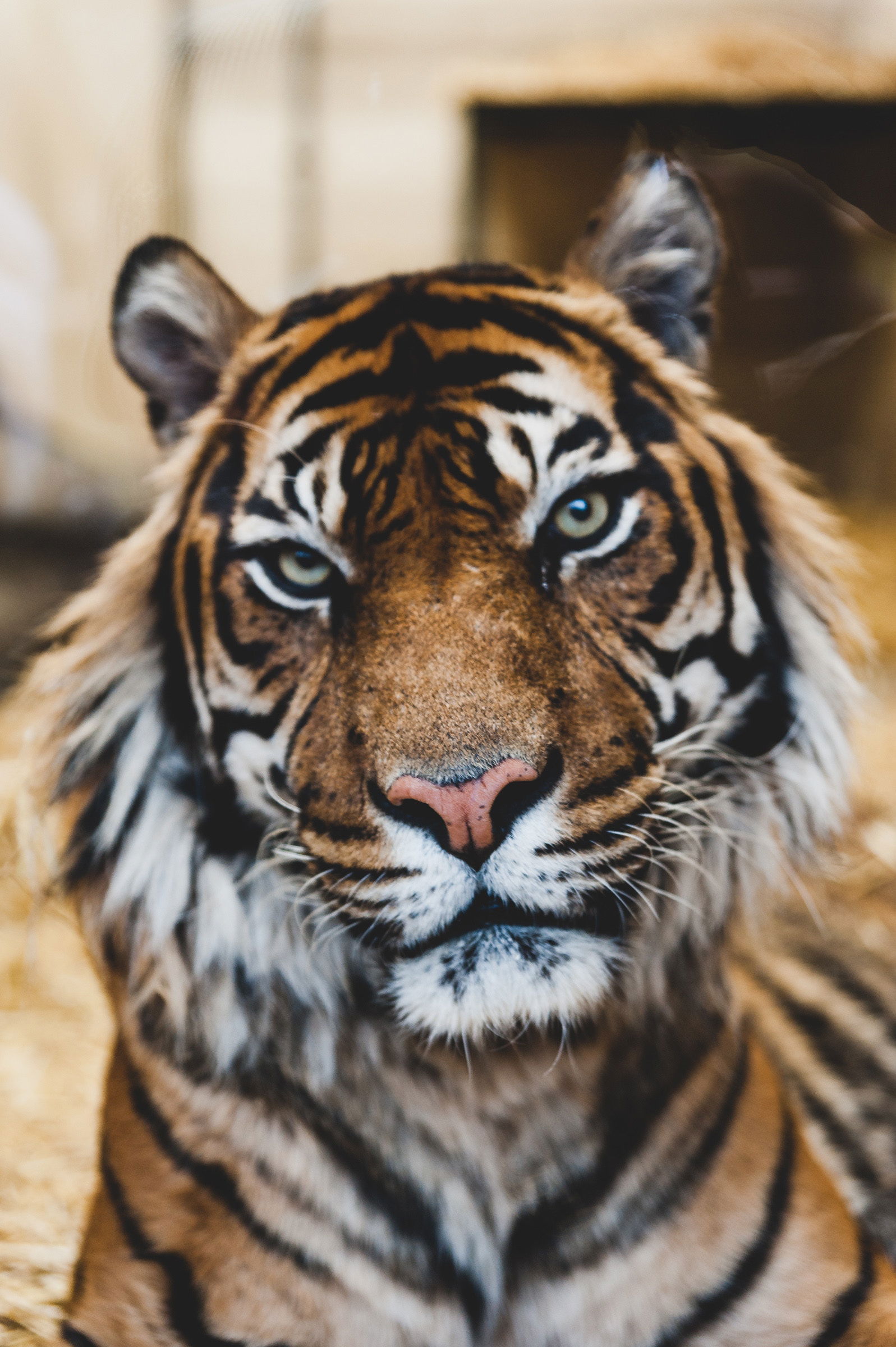
Orange is a common color of the stone amber and black is the color of obsidian, jet, or Apache Tears. The amber color is a symbol of life (orange or yellow-orange most commonly like the sun) and black is a symbol of the night and mysteries. Tiger eye too is a good stone for those with a tiger totem or wishing to work with the energies of the tiger. But, for now, I am writing about the monarch butterfly as one of my main totems and my experiences therein. 

The colors of the monarch teach us to be able to play and dance in the shadows as well as the light--and about their interplay where there is that moment of transcendence of the opposites, as depth psychologist C. G. Jung described this bridging of opposites. Day and night and where they bridge are times of dawn and dusk. Even when we see a monarch at mid-day or any time in morning or afternoon there is the reminder of the night in its blackness of mystery. 

Aside from universal or common attributes/qualities, how the monarch speaks to you can be also individual. In other words, though we may both experience the universal symbols of the monarch and its effects upon the psyche, my specific individual experience or dream of a monarch can be different from your experience or dream of this butterfly. Of course, butterflies are known for grace, and for liking the nectar of life as do bees and hummingbirds. 

In one dream I had of a monarch, it was flying towards me with what would normally be grace yet in this dream it was flying in slow motion as if an invisible hand was directing it to me like a conductor of an orchestra directs music. It seemed it was being either pushed or pulled--but definitely led--to me as if by some magnetic force. The monarch then landed on my lips and wanted to enter my mouth to be inside me.

At first I was taken aback, and startled, I closed my mouth which I had opened in astonishment so that it would not end up in my mouth and so that I would not swallow it. I did not want that experience and I did not want it to die by my ingesting it. 

However, at the time I was guided by a great dream and dream medicine teacher and Jungian shaman to go ahead and let the butterfly in and see what happened--in a session of Active Imagination which is like meditation (though has many forms/types). 

When I did as was suggested, I realized that the butterfly and I had had two different interpretations of its activity. By entering through my mouth, it was not going to be ingested in my dream the same way we would ingest things in our regular waking world. It was the spirit of the monarch that wanted to enter my being. I was then able to dance the monarch dance to in spirit fly with it for the healing of its medicine.

One animal medicine it had to share with me is that by landing on my lips and wanting to be in my mouth it wanted to be with me in speech. It wanted to assist me in making my speech and expression graceful and beautiful. Another medicine it had to offer me that I had to find out much later is that I had a stomach ailment that needed attention and medicine in the 'real' world. It wanted to help me with my digestive system--and here I did not want to ingest it! The thought of ingesting it according to the laws of the physical world in our every day lives averted me from letting the butterfly do its medicine. I had to get used to the idea of being able to work with the medicine of the monarch this way. I had to find out how different the dream and imaginal worlds can be from our world we are used to, in quite a new way. I had worked with my dream world before and my imaginal world before but this was an entirely new experience from which to learn. 

You will find as you explore your dream world and imaginal world in Active Imagination that plenty of surprises will be in store. They are there now, waiting for you. 

This monarch waited for years of my lifetime for me to engage it in my imaginal world--it had been there since my childhood. In fact, it was my childhood friend, my cousin, who in the dream held out a small jewelry treasure box to me and opened it when the monarch flew out; together, when we were children, we would watch and chase the monarch butterflies along the banks of the lagoon off the lake. We were always delighted to see them. And finally, the monarch was delighted I could work with it as a totem in this dream.

I had other monarch dreams before this one before, but in those particular cases I was not called to work with the animal in quite that way or in such a personalized manner. 

In an earlier dream some years before, I had a dream I was in a science lab and had a notebook and pen and camera and around me were a whole bunch of monarchs flying all around the room. This, I learnred later, was an announcement that I was somehow going to work with monarchs. I now often do things to help save the monarchs such as plant indigenous flowers that the monarchs like and also their caterpillars, such as milkweed. 

Other times monarchs come to me in 'real' life by giving me an omen of things. Once when I had quit a job I loved for a higher paid position and more hours, when I got to my car to open my driver's seat door, I looked down and saw a dead monarch at my feet laying right at the door. My heart 'sunk' in that moment and I knew my decision was taking me off my path. I eventually was able to make my way back on track. 

Other times Monarch has showed up when I am thinking about something I need to make a decision on; it seems like an affirmation of a particular idea I have when I need to decide. This has happened often. This is called the symbolic life and ancient shamans viewed the world this way in symbols--in an animated sense that the animals spoke to them--from the anima mundi or world soul. Ancient people had the sense of animism in life. 

In active imagination sessions I drew my monarch totem. In one session I drew it in a sort of non-realistic way but it meant the same essence of the animal to me. 
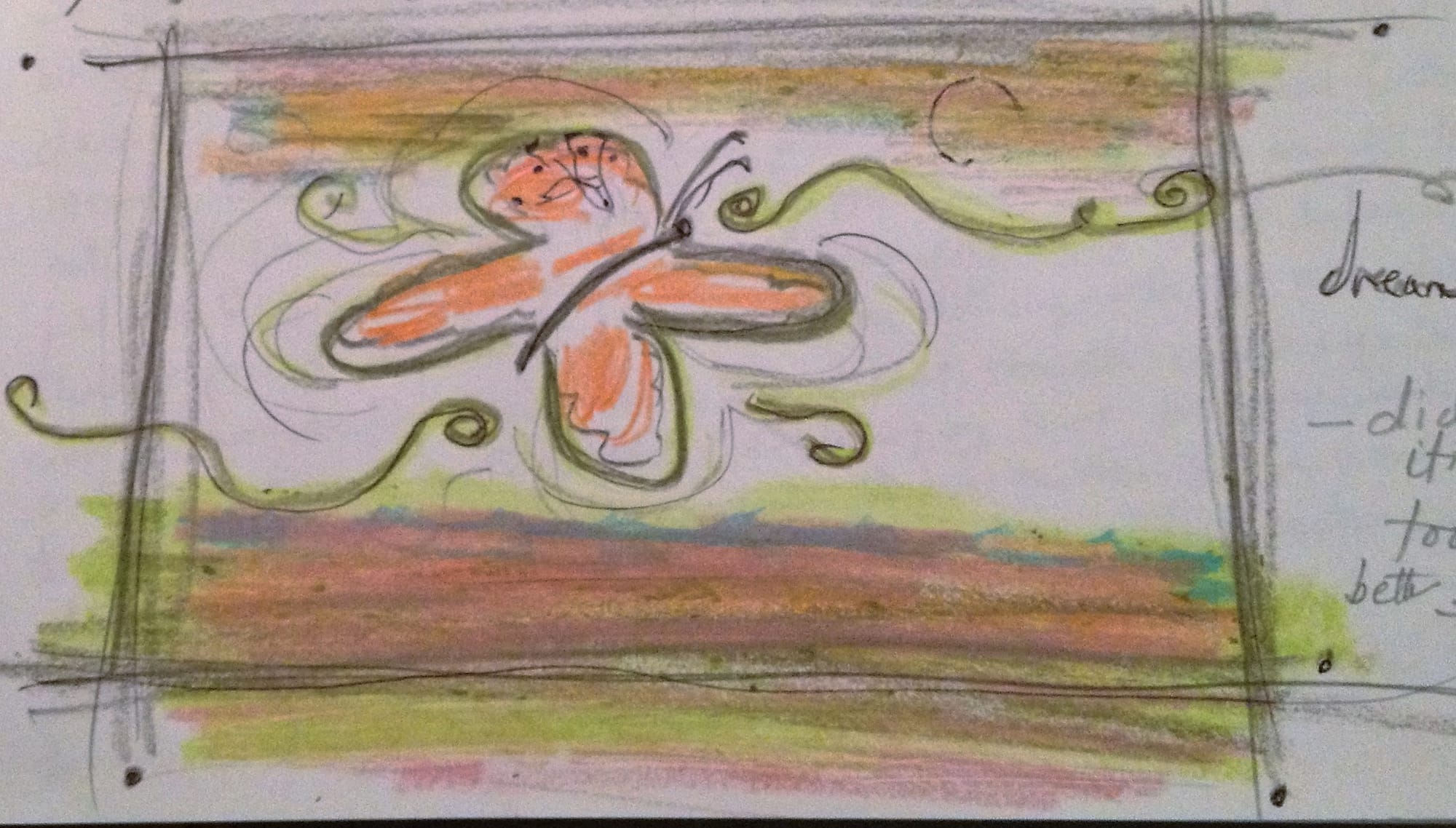
I did not quite finish this one and may go back and finish it. I tried in this drawing to capture the magnetic pull of the monarch as it seemed to be directed to me by some magnetic force of fate. The unusual movement surely was a signal to me to pay attention, that something very unusual and special was going on. This was one case where animal medicine actually helped diagnosed an illness. Of course, this is not to replace any regular medicine--but it did alert me to the fact that something was wrong and perhaps to see my doctor.

Animal medicine is there too to teach us lessons and give us gifts. In my dream, the gift presented itself by first showing to me it was indeed a gift by appearing from out of a treasure box. It also hinted at how long it had waited to be released into my imaginal life and dream world in that manner through the dream-fact that it was my childhood cousin who presented the box to me like a more positive Pandora's box. It was like the Hope that was the last ghing left in Pandora's box perhaps! (Not that anything prior had been all the ugliness escaped out into the world!) It seemed it was the butterfly who was the one that was curious about me and wanted to be in my being to help me, to give me a portion of butterfly spirit--portion being almost like a secret potion medicine as I did find later I needed medical attention and medicine of not just the totem sort. 

Your totem can be a friend to your soul and your psyche and spirit. Animal talk is a potent medicine. Animal qualities are there around us and we can learn how to work with them--we can learn their animal talk and learn how to talk the talk and walk the animal walk, and walk with our animals. They are already there walking with us and just waiting for us to become conscious of them by making the unconscious conscious.

(I have shared this post elsewhere, before, on one of my websites.)


Thursday, May 20, 2021

5/20/2021: After a Long Hiatus


(Photo by M. Bencivengo, Reflection of Clouds on Backyard Lagoon)

We have heard over and over that last year was a long, hard year. There is so much I could say about it, but I do not feel like doing so at this time. I am just so glad it is over. 

I want to resume this blog, get back to where I was before I took my hiatus. Too, I recently began a dream blog, another separate blog. This one is mostly for all my non-Jungian thoughts and activities. The dream blog is rather Jungian in its psychology or outlook--psychological outlook. Both blogs are also what I can call "in-looks." 

The nice May weather is here and thus I "come to life" again, resurrecting along with the plant life here.  I hope my writing will resurrect as well. I still have not been typing my manuscripts much at all due to tech difficulties but I now vow to get some help. I do want to self-publish someday. When I was young I used to think it woudl be important to have my books published with small press or large press companies. Poems at small press and novels at the big publishing companies, I thought. But I never got around to embarking upon that ship. My ship full of dreams sailed off and wandered at sea while I stayed on the shore doing other things that were necessitated. By the end of most each day, every week, each month, each year, each decade, I was tired. In my 20s I said I had my 30s to publish, in my 30s I said I had my 40s to publish, and in my 40s I said I still had my 50s in which to get published, and so on and so forth. Now I am 60 and wanting to finally fulfill these hopes and dreams. I think now I will finally do it because now I know I have to as I age, as I do not want to take regrets with me to the grave. That is a very grave matter. I do not think I am being too sad or dreary--I regard it as just being realistic and now quite determined in my hopes for achievement. 

Meanwhile in all those years I did not try to publish things barely at all (I did send out a few poems here and there that did get published), in all those years I was mostly on hiatus from my own writing goals, I did still write here and there also besides just in my journal. Very little of my journal is the kind of stuff that people scramble to publish after a writer dies--I did not usually write "nicely" in them, not much in literary style. I did, however, record dreams in my journals. And meanwhile in all those years in which I was on hiatus from my writing goals I did live a full life. I was employed as a teacher and newspaper writer, I was a mother, and I was a wife trying to keep up with the hectic lifestyle of my musician husband and also keep up with the house. 

I read once somewhere that someone found a pioneer woman's diary and each entry each day was merely a list of all the household chores she did such as, 

Made beds
Cooked breakfast
Packed school lunches
Saw children off to school
Did dishes
Swept floors 
Did gardening
Cooked lunch
Did dishes
Did laundry
Hung clothes to dry
Put clothes away
Cleaned vegetables
Cooked dinner
Did dishes.

But, no matter what, there is always time for bedtime stories whether reading to the children in your life (including grandchildren) or to oneself.

Another Year, Another Summer,
Mary Ann
mbenci.writes@gmail.com

Friday, January 8, 2021

Wading Through the New Year With Wade Ceramics and Russel Crowe's Noah


(Photo by Kit Dietz of Huron, on Lake Erie)

Dear Reader, 

The Wade miniature figurines of which I wrote in my last blog a couple days ago are not the most costly of porcelain miniatures, but for me are among the most sentimental of those I own. Part of the reason I click with them so much is that I know where they cane from--or, to be more grammatically correct (albeit less conversational), from where they came

From Where They Came

Wade Animal Figurines

Now known as Wade Ceramics Ltd, Wade Ceramics was first established in 1867 in England. According to Wikipedia,

in the 1950s, the Wade potteries created 'Whimsies', small solid porcelain animal figures first developed by Sir George Wade, which became popular and collectable in Britain and America following their retail launch in 1954, and were widely available in shops throughout the 1950s, 1960s, 1970s, and 1980s. The figurines have also been offered along with Red Rose Tea since 1967. (Retrieved from https://en.wikipedia.org/wiki/Wade_Ceramics#cite_note-wade_official_site-1


Animals on the Ark, in the 2014 Crowe's Noah

Matt Zoller Seitz (2014) begins his review of Russel Crowe's Noah by saying simply that "Noah is a bizarre movie." He then continues that it is  

a modern blockbuster, chock full of the visual and aural and narrative tics we expect from modern blockbusters: flash-cut nightmares and hallucinations, prophecies and old wise men, predictions of apocalypse and a savior's rise, computer-generated monsters with galumphing feet and deep voices, brawny men punching and stabbing each other, and crowd scenes and floods and circling aerial views of enormous structures being built,  scored to tom-toms and men chanting and women wailing.  (Retrieved from https://www.rogerebert.com/reviews/noah-2014)

I found the whole told tale in this film to be rather shamanic as well as biblical. Not only was the old man and grandfather Methuselah able to make miracles happen (like magic) and thus like a biblical shaman but it was such a wondrously curious moment when the animals start showing up at the ark in long lines of two each (yes, just as we hear in Sunday school two by two) as if they somehow know to do so and where to go in order to do so, and none of them attack any of the others that would naturally be their prey--all as if by some inner knowing given to the animals by some divine guidance (assumedly from God), and this appears--when the animals appear-- as some magical miracle too. Would that all people could get along like that. 

Now, I have read other comments on this film from those who expected a more purely Biblical rendition from those who did not like how the Watchers who turned into stone exploded and then rose into heaven when their time on earth was completed when being attacked by a kingdom trying to take over the ark so as to not be swept away in the flood and die, but I loved watching the rock-monster-watchers who were not monsters at all if they were on your (Noah's) side move slowly and surely and so heavily to guard the family God chose to survive. I also love the biblical bird at the end that bestows the olive branch to let Noah and his family know land is nearly afoot. We all know that ending--it rarely varies. Somehow it is something nice to depend upon as an expected ending just as we have come to know to expect land. Out here on the big lake sometimes we do not see land either, but we do know it is there--and expect it in certain familiar places off in certain directions. 

There is no big message in this blog/journal entry--or at least not one I can find; I wrote it only because the miniatures I recently wrote about that I keep in my printer's drawer, because of my waxing nostalgic about all the years I have been opening boxes of black tea, became freely associated in my mind to the movie I saw right around Christmastime about Noah, the 2014 Russel Crowe version. And it was good. 


References

https://en.wikipedia.org/wiki/Wade_Ceramics#cite_note-wade_official_site-1

https://www.rogerebert.com/reviews/noah-2014

https://www.channelguidemag.com/tv-news/2015/03/20/up-premieres-epic-original-film-noah

Remembering the Simple Things,
Mary Ann
mbenci.writes@gmail.com


Sunday, January 3, 2021

Aha Nostalgia (written December 27, 2020 and edited January 3, 2021)


Image by Terri Cnudde from Pixabay

Dear Reader, 

As the New Year approaches and as I open a box of my life-long favorite black tea, I feel one of those nostalgic waves wash over my mind where my life-long memories are stored. Like many people, I run though filmy memories from over the years every Christmas and New Year's Eve. Yet, any time I open a box of Red Rose Tea, no matter what time of year it is, I feel a strong sense of aha! nostalgia


I
usually buy it at the drug store. Going to the drug store to buy it when I am nearly out (I cannot bear to run out of it) is an established ritual in my life, and I visit the same shelf each time, knowing exactly where it is kept, just as I make a big deal about where it is kept in my kitchen. It always has a special physical place as well as a sentimental one. 

As I remove the plastic wrap (once cellophane) from the box, I hear the familiar crinkle of that particular wrap of plastic as I see the familiarly featured red rose. I always double-check the corners of the box front, in hopes it contains one of the free porcelain miniature sculptures inside for which this tea is famous. In my printer's drawer, I have many a wild animal and dogs, cats, birds, lighthouses, sailboats, and more. When I remove a miniature figurine from the box, I see in the image of the current piece all the other carved pieces I have been able to collect. There is an old-fashioned sense of continuity in time and consistency of place within each box of tea and within my printer's drawer within each piece. However, it is this consistency that lets the mind travel through old memories or the through the making of new ones. The Wade lighthouse figurine pertains to the lighthouses in the midst where I live, and in the mist of fog on the lake; my Wade sea gull and sailboat figurines remind me of the gulls and sailboats here on the lake and of the gull salt and pepper shakers and beachside scene teacup my daughter when young purchased at one of the city-wide garage sales here--and those garage sales also bring back a lot of memories of a lot of people and their arts they have sold there. The city wide garage sale takes place near the marina which reminds me of all the fun festival events that have taken place there year after year. This instantly reminds me of the wood carved painting my mother purchased by a local Lake Erie artist way back when in the 70's. 


(My American Wade figurines are not pictured above with the other photos.)  

I mentioned above that this consistency lets my mind travel (sometimes expectedly to certain things, places, and times and other times unexpectedly); my mind does so not just through the free associations of images I receive but through another fun "surprise" I find in every box. Placed between each row of tea is a thin sheet of cardboard that is the perfect size and shape of a bookmark. Whenever I remove these self-proclaimed bookmark discoveries I place them into the books I am reading at the time. (See photo below.)


Then I put my new figurine in my printer's drawer that my mother bought me when I was young. The printer's drawer hung above my desk in my room. I would sometimes look at it as I wrote. I would sometimes look at it as I did artwork. I would often stop what I was doing and daydream a bit before going back to work at play. I often played with the figurines, configuring them similarly to porcelain puppets or cartoon characters, having them hold dialogue with one another. My daughter, when she was little, and now my granddaughter do the same sort of thing. I am going to wait a few more years before passing my printer's drawer and the miniatures on to my granddaughter. Each of all three of us were (or are) only children, and all three of us have had big childhood imaginations--because with things like puppets, none of us were really ever alone. Living in a world of adults, we all encountered tea (or coffee) at a young age, with which we were fascinated, and later came to love in flavor and not just in the fragrance of the aroma or the sight of tea or teacups, and we all came to love and admire things like teacups or other collectibles at a very young age. 

In keeping to the theme of the lemon tree blog here, I can also add that I do, of course, often enjoy lemon in my tea. And here is a red cup for the bright red color of vitality for the coming New Year. This is a stock photo from a photo shop, not my photo, but it reminded me of all the Chinese New Year parties my daughter had when she was little and all the red decorations I used to purchase each new year. This too, for old time's sake or to think of things ever since long ago. 


To read more about the nature of memory and "old time's sake" here is a link to the meaning of the phrase of the popular New Year's Eve song. "Auld Lang Syne." 


In fact, this blog exists partially so that I myself can indulge in my memories as I share them with you, and that my memories remain here for my granddaughter as she grows up, so she can read them and have that continuity in her life, for auld lang syne. 

Stuff Not Forgotten,
Mary Ann
mbenci.writes@gmail.com